

You are here: Jærmuseet  >  english version  >  Vitengarden  >  Audamotland

Audamotland

Audamotland is the neighbouring farm to Kvia. Jærmuseet owns the old farmyard and buildings, whereas the outfields and some of the infields belong to the state-run Hanabergmarka cultural heritage and recreational area.

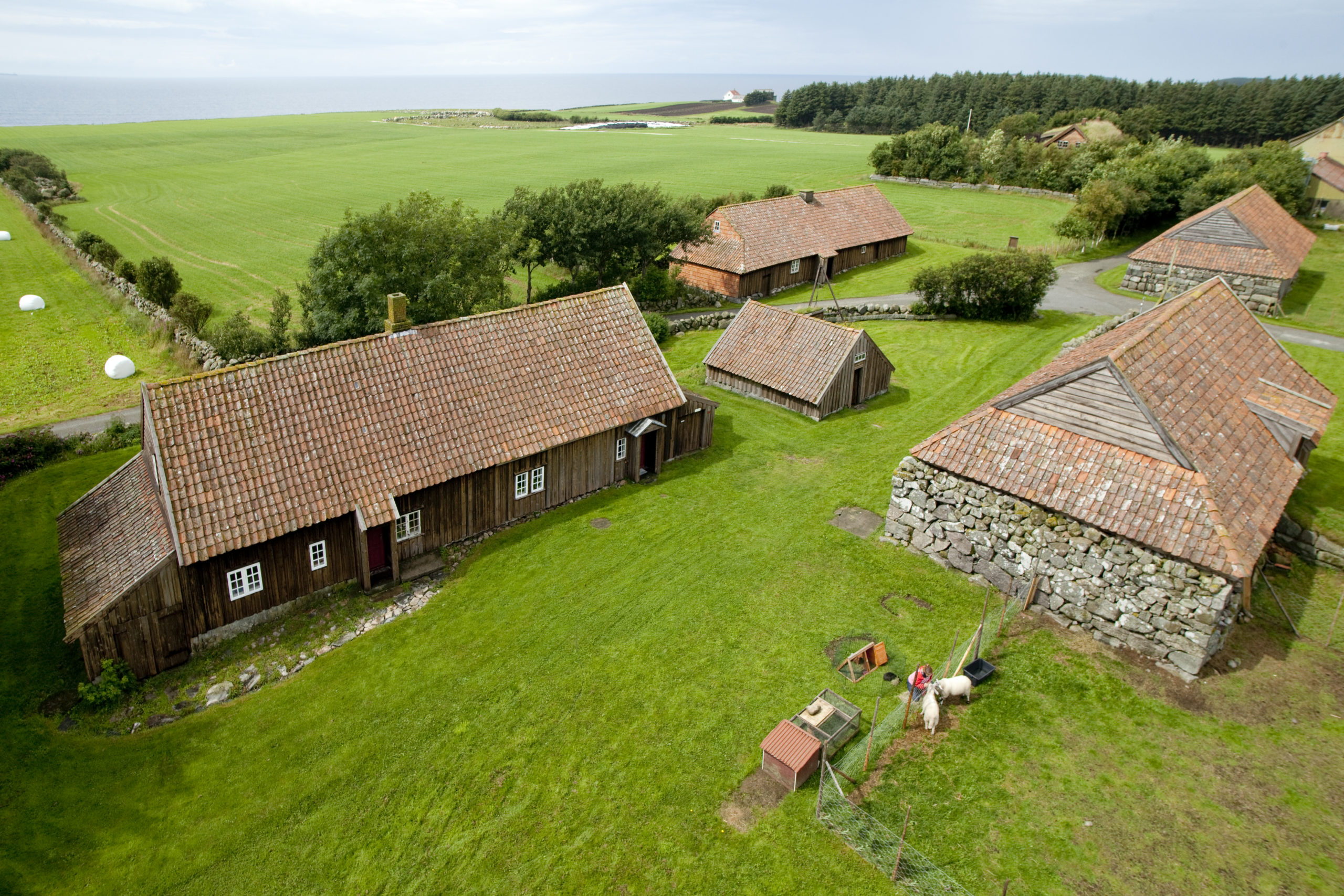
At Audamotland you can still see the old farm structure typical for the region. The courtyard, as its stands today, dates from the end of the 18th century. From the farm, you can still follow the old farm roads and cattle tracks through the infields and outfields and ”markagarden” (the field wall), which separates these, still stands intact.

“Heimehuset” (the main farmhouse) has been moved and several extensions have been added over the years. The oldest building is said to date from the latter half of the 19th century. The barn has also been extended over the years.

”Audamotland”
According to historian Birger Lindanger, the farm was originally called ”Øksnamotland” (cf. Oxford?). But after the Black Death in 1349, the farm was left abandoned and was given the name Audamotland (Ødemotland – reference to it being a deserted place).

The farm was probably inhabited again around 1600.

“Heimehuset” (the main farmhouse) and the yard
The original farmhouse at Audamotland were located closer to the lake. However, when a son (Ola) drowned in the well in 1792, the family moved the farmhouse a few hundred metres further west to where it stands today.

The south part, ”bua”, is the oldest and the timber here has clear marks from having been moved. The date 1654 has been inscribed in the roof beam and the logs and notching indicate that it dates from the 17th century. One of the walls in the attic has also been built using old timber and there are several signs that shipboard has been used.

The other part of the house probably dates from around the mid 1800s. In 1908, the northern lean-to was torn down and replaced by a so-called “folgestove” room.