Educational programme at Vitenfabrikken
-
What do we have?
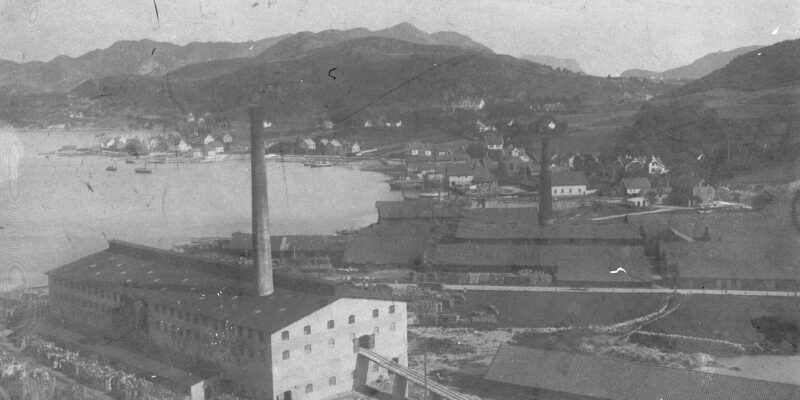
- Krossens Havremølle (oat mill), which was in operation from 1912 to 1988, has been turned into a museum with equipment and machinery – and offers a relevant educational programme
- Town history exhibitions at Solaveien 10 with relevant educational programme
- ”Leonardo da Vinci – a genius of his time” exhibition with relevant educational programme
- Mathematics exhibition ”Everyone counts!” at ”Abelloftet” with relevant educational programme
1. Leonardo da Vinci – a genius of his time
Address: Krossens Havremølle museum, Storgata 26
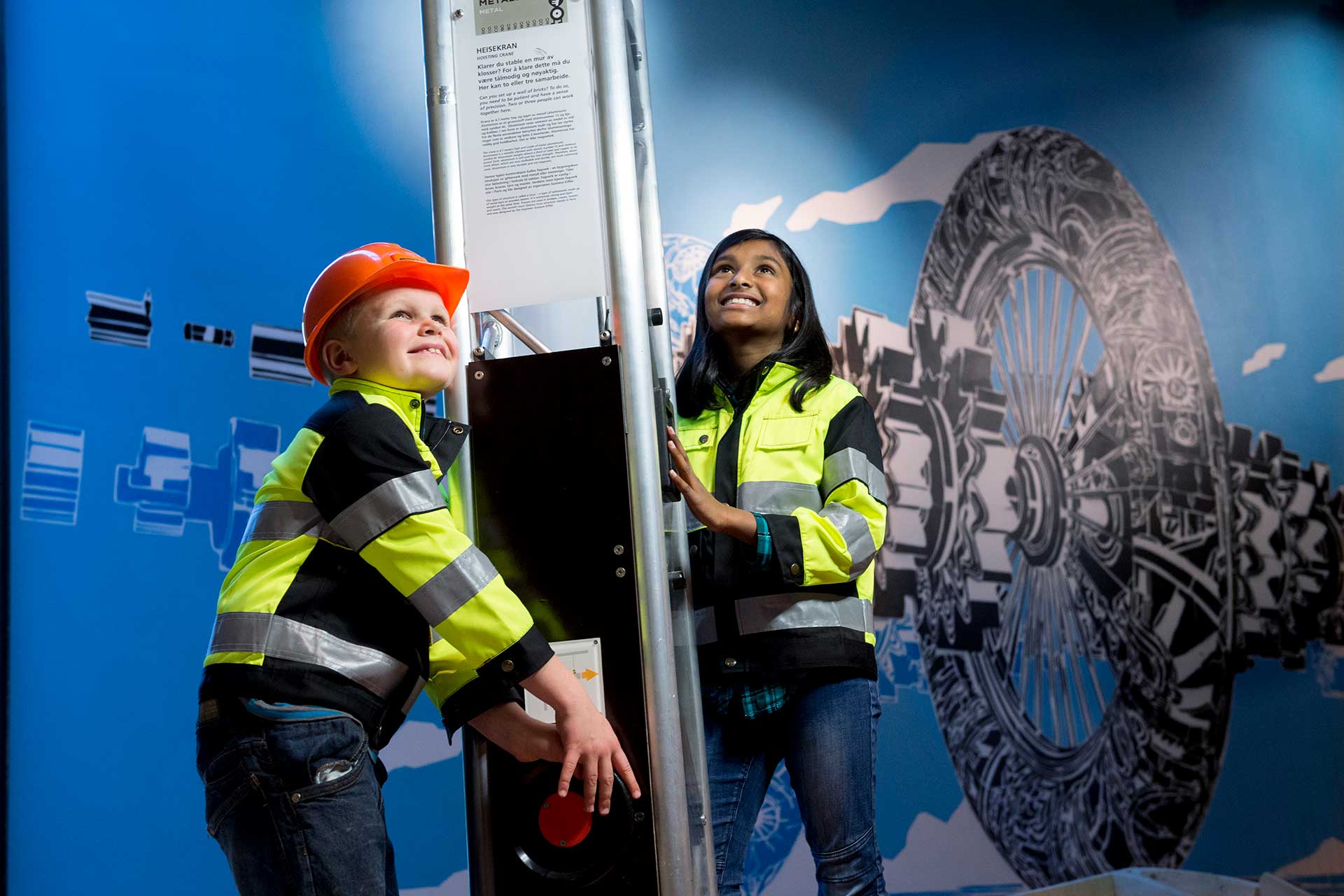
” Leonardo da Vinci – a genius of his time” is a permanent exhibition displaying 30 interactive models built according to Leonardo’s sketches, including a wind gauge, machine gun and bicycle.
a) Leonardo the inventor and scientist;
- Using role-play, pupils are taken back to Leonardo’s time.
- The pupils can see and have hands on experience with the exhibition, where most of the models are interactive.
- Leonardo built a car that was driven by spring power. Pupils can build a car driven by the power of a mousetrap spring.
This session lasts approx. 1½ hours. If the pupils want to take their mousetrap cars home with them, there will be a charge of NOK 30 per person for materials.
This session is suitable for 4th – 10th grade and can be linked to history, physics, art and crafts in the Norwegian National Curriculum of 1997 (L 97).
b) Leonardo and mathematics;
- Using role-play, pupils are taken back to Leonardo’s time and his cooperation with mathematician Maestro Luca.
- Pupils will learn about the platonic bodies.
- Pupils can build a tetrahedral fractal and discuss / discover the geometry found in its structure.
This session lasts approx. 1½ hours.
Suitable for 4th – 10th grade
2. Exhibition on industrial and urban development in Sandnes
Address: Solaveien 10, 1st floor. The exhibition comprises several parts:
A large part of the exhibition focuses on pottery and brick making. The town of Sandnes developed around these industries, which also eventually spread to the rest of the county. The tradition survives today at Figgjo AS, Jærtegl and several small potteries.
Although the raw materials for the timber and furniture making industry come from outside the region, Rogaland is the second largest furniture making county in Norway after Møre & Romsdal, which is the largest. Large timber companies, such as Block Watne, eventually established themselves in the area.
The engineering industry also became important to Sandnes and its environs. Small farm forges expanded to become engineering workshops. Three companies, which have had success in international markets, are Jonas Øglænd, Sandnes Aducerverk and Polaris Fabrikker.
The woollen industry was also important to the area. And although it is not part of the exhibition, it is mentioned in our guided tour. The museum also focuses on the changes that have taken place in the urban structure of Sandnes. We can also arrange various guided walks through the town.
As mentioned, the pottery industry has been important to the area. We have therefore invested in a kiln, so that pupils can take a more active part in the exhibition.
a) Local history exhibition
The exhibition may be used as a local history resource, but may also form the basis for various local history project work or guided walks through the town. The museum can provide good information, inspiration and help with such project work. Our educational programme is flexible and therefore focuses on different areas, depending on the needs of the teacher/school/pupil.
b) Ceramics – pottery
Pupils learn about clay in natural, dried, fired and glazed form. They are introduced to the fundamental features of local pottery production, of which the history of the pottery cuckoo whistle ”Sandnesgauken” is an important part.
- Pupils are introduced to the first potter in Sandnes, Christoffer Zimmermann, in his workshop and can see how the town’s famous cuckoo whistle is shaped on the potter’s wheel.
- Pupils get to make their own cuckoo whistle in the public workshop. The cuckoo whistle is fired in the kiln and is ready for collecting within a month.
This session lasts approx. 2 school hours (11/2 hours).
In accordance with the Norwegian National Curriculum of 1997 (L 97) the workshop is linked to 2nd grade art and crafts, but is suitable for all grades.
c) Ceramics – pottery traditions
The session focuses on the history of pottery in Sandnes and the connection between local natural resources and also the importance of the pottery industry for the development of Sandnes as a town. Pupils will be shown examples of products from the brick making and pottery industry and will learn about the functional qualities of the products.
- The pupils will be given a description of the various tasks in the potteries and will use this knowledge in role-play, where the communicator and the pupils stage parts of the production process.
- They will be informed about the development in the local pottery industry up to the present porcelain factory at Figgjo and the work of independent potters.
- Pupils get to make their own utility article using blue clay from local clay beds. This is decorated using traditional white slip and using traditional tools.
- The objects are fired in the kiln and are made ready for collection within a month.
This session lasts approx. 3 school hours (2 hrs and 15 min.).
In accordance with the Norwegian National Curriculum of 1997 (L 97), the workshop is linked to 6th grade art and crafts.
3. ”Abelloftet”
Address: Solaveien 10, 3rd floor
Mathematics exhibition ”EVERYONE COUNTS!” was opened to school groups and the public in February 2005. The public is given the chance to discover and study various mathematical problems through activities / experiments.
”EVERYONE COUNTS” shows a selection of the mathematics around us associated with different areas (nature, the universe, art, maps, historical number systems, paradoxes, geometry, units of measurement, history of mathematics, ethno-mathematics…etc.)
School groups may either book a teaching session (refer to the list below) or use the exhibition on their own. If you want to use “Abelloftet” for your own teaching session, it is important that the teacher has familiarized himself/herself with the exhibition and how it should be used. To order such information and teaching sessions, please contact the person responsible for mathematics at the centre. (The session lasts between 2-4 hours, depending on requirements).
Educational programme linked to ”Abelloftet” and the ”EVERYONE COUNTS” exhibition;
a) Everyone counts
This session is suitable for groups visiting “Abelloftet” for the first time. Depending on their age and any requirements the teacher may have, pupils are given an insight into different subjects from the history of mathematics and mathematics around us.
- The youngest children are introduced to 13th century mathematician Leonardo Fibonacci, while the older children (5th grade and upwards) meet someone from the museum staff.
- We ”travel” through history from the Stone Age man’s counting, through the various number systems of different cultures, up to how the decimal system came to Europe. Finally, we take a look at mathematics in nature and the world around us.
- Pupils will be given the opportunity to work with specific subjects and objects in the exhibition (a list of subjects and the experiments in the exhibition may be obtained on request).
This session last approx. 2 school hours (1½ hours)
Suitable for all school children
b) A day in Pythagorean society
- Using role-play the pupils are taken back to Pythagorean society where they meet Pythagoras, among others.
- The pupils are given the chance to work with different activities studied by the Pythagorean society (among others, the Pythagorean sentence).
This session lasts 2 school hours (1½ hours)
Suitable both for 8th and 9th grade
c) A day in the house of wisdom in Baghdad
- The communicator takes the pupils on a journey through history and looks at how algebra has evolved over the centuries. (From the birth of civilization, through the Greek philosophers and mathematicians up to the house of wisdom in Baghdad. The journey ends in modern symbolic algebra (that pupils are familiar with from school mathematics.)
- The pupils are given different practical challenges related to algebra.
- For those who wish, there is a short tour of the planetarium, as many of the discoveries in the house of wisdom involved astronomy. Focus here will be on the Arabian constellations.
This session last 2 school hours (1½ hours)
Suitable for grades 7 – 10, but the contents are in accordance with the Norwegian National Curriculum of 1997 (L 97) for 9th grade. (May be used in denominational education when studying Islam, or in arts/crafts and Arabian art.)
d) Galileo & the solar system
- Role-play where the pupils meet Galileo Galilei, and hear about how man’s conception of outer space has changed over the centuries.
- Various practical activities related to astronomy.
- A planetarium show where the pupils learn how to navigate the stars through the various constellations. Stories about the constellations vary from culture to culture. The pupils will hear a selection of these.
This session lasts 2 school hours (1½ hours)
Suitable for all grades, but in accordance with the Norwegian National Curriculum of 1997 (L 97) is especially oriented toward 4th grade science.
e) Kepler & outer space
- Role-play where the pupils meet Johannes Kepler who talks about cosmology and his discoveries (related to the ellipse).
- The pupils will be given a presentation showing pictures and film clips of phenomena related to the stars and outer space. (The presentation will be continuously updated to include relevant phenomena.). Topical questions that research is concerned with will be touched on.
- Practical activities related to astronomy.
- Planetarium show including central constellations and galaxies.
This session lasts 2 school hours (1½ hours)
In accordance with the Norwegian National Curriculum of 1997 (L 97) is linked to ”physical cosmology” in 8th grade science.