
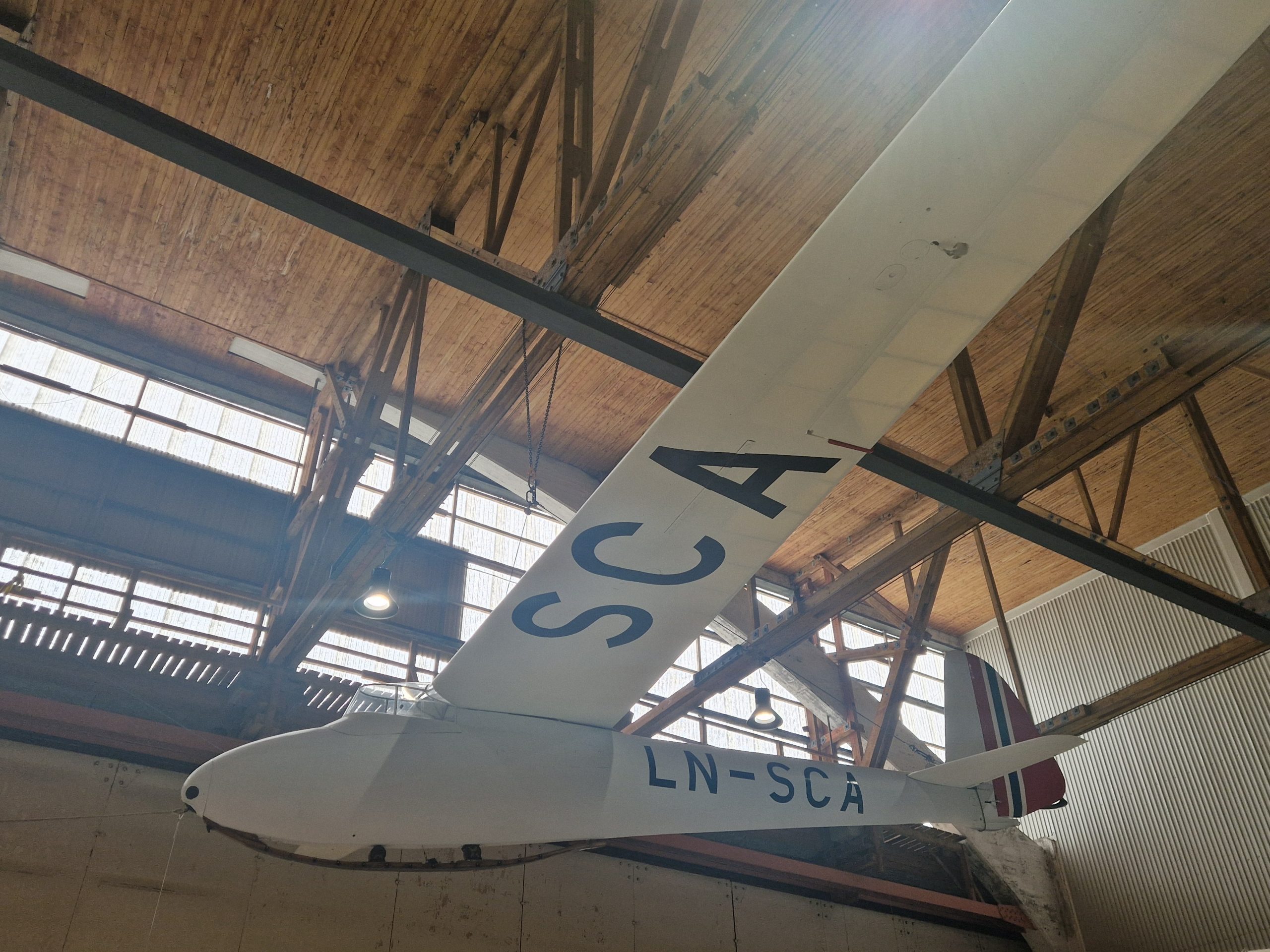
Sailplane has never been an official Olympic discipline. In 1940, however, it came close. During the 1936 Olympic Games in Berlin, it was included as a demonstration sport. It was subsequently decided that it would be part of the programme at the 1940 Olympic Games in Finland. Sailplane pilots compete in two different disciplines: cross-country flying, where the pilot must complete a set course in the shortest possible time, and aerobatics, where the pilot performs loops and rolls. To achieve this, the pilot must exploit thermal lift and other forms of updraft that keep the aircraft airborne. The DFS Olympia Meise was developed to ensure that competitors would compete under equal conditions. However, in 1939 the Second World War broke out and the 1940 Olympic Games were cancelled. Despite this, the new sailplane became very popular within the community.
When the Olympic sailplane was to be developed, a competition was announced to select the best design. Five aircraft were evaluated, all of which were sent to Italy and tested at Sezze airfield outside Rome. The aircraft from Deutsche Forschungsanstalt für Segelflug (DFS) won the competition. This design became known as the DFS Olympia Meise. Prior to the Olympic Games, competitors were allowed to access the blueprints free of charge. In the following years, the aircraft was produced in nearly 1000 examples.
The museum’s aircraft
The museum’s sailplane was built by the German Fred Schmetz in Herzogenrath in 1944. It was purchased by Hirdens Flykorps in Norway and made its first flight in Norway at the beginning of 1945. Between 1 and 2 March 1945, it set a new Norwegian endurance record for sailplanes. It flew over Steinsfjorden in Buskerud for 18 hours and 52 minutes.
After the war, the aircraft was confiscated and stored until the spring of 1946, when it was taken over by the Norwegian aero club Norsk Aero Klubb (NAK). Oslo Flyklubb operated the aircraft until its certificate of airworthiness expired in July 1947. Since then, the aircraft has remained grounded. It was stored in a tram depot at Majorstuen before being moved to a barn at Eidsvoll.
In 1993, the aircraft was transferred to Flyhistorisk Museum Sola. At that time, it was in very poor condition. The sailplane was restored at Kjevik, painted white, fitted with national flag stripes, and given the registration letters it carried when flown by Hirdens Flykorps during the war.
| Type | Single-seat sailplane |
| First flight | 1939 |
| Length | 7,3 m |
| Wingspan | 15 m |
| Height | 1,6 m |
| Weight, empty and max | 165 / 290 kg |
| Top speed | 220 km/h |
| Country of origin | Germany |
| Museum number | FMSG2011.28.01 |
| Project manager | Rasmus Svihus |