Stories from World War II
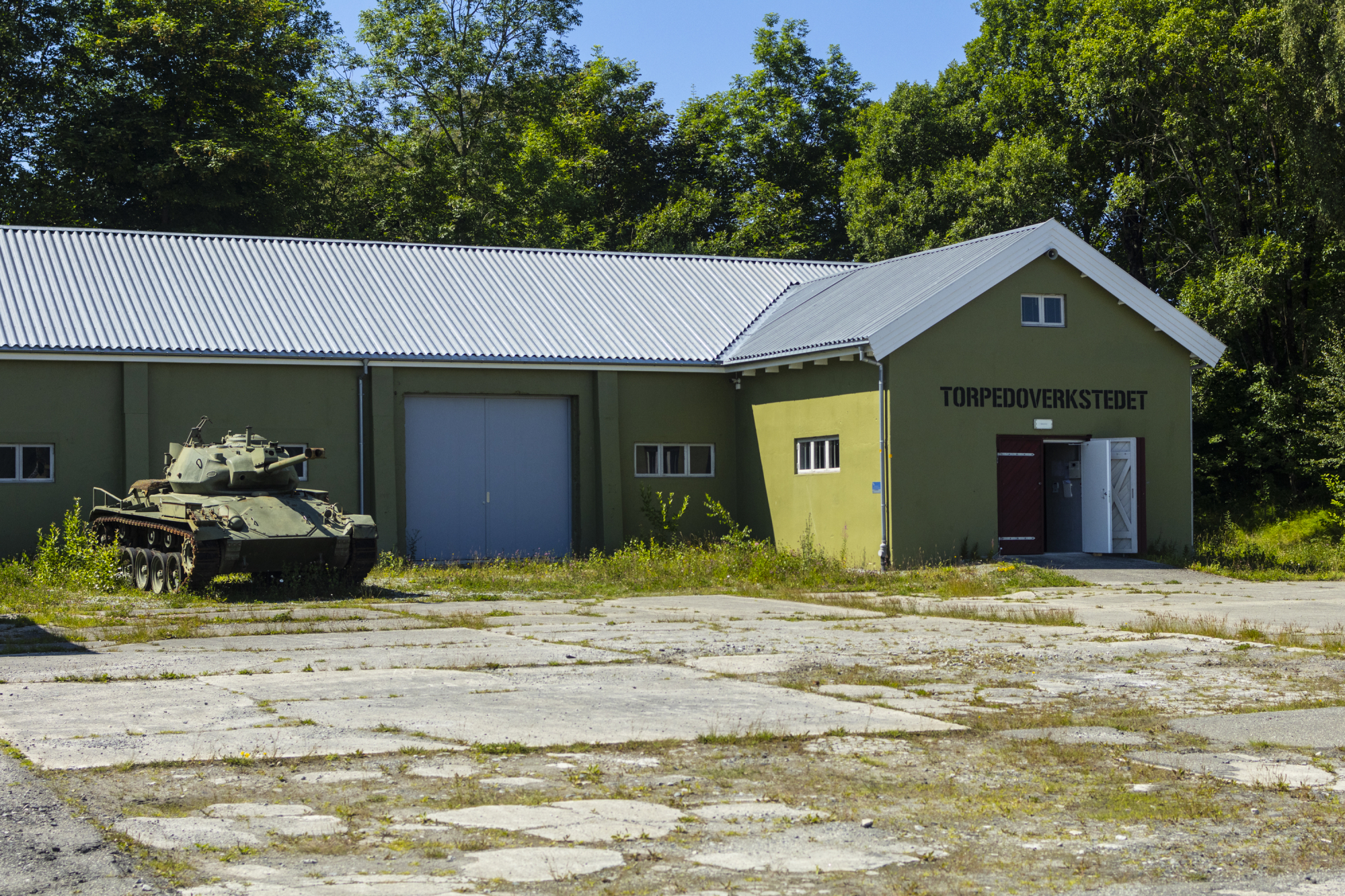
The Torpedo Workshop was built by the German occupying forces during World War II. At the time, it served as a torpedo workshop for the German seaplanes operating from Sola Sjø at the inner end of the Sømmevågen bay. Today, the building is one of three exhibition venues belonging to the Sola Aviation Museum.
In the exhibition “Stories from World War II,” the war is conveyed through a selection of individuals with local ties. Their personal stories also branch out into the wider world, providing visitors with local history from an international perspective. The exhibition begins with a film before you meet the individuals through audio guides.
In the exhibition, you will meet:
- The Joseff Family moved to Stavanger in May 1940. David and Sofie had fled to Norway from Lithuania around the turn of the century. They married in Oslo and had three children: Hildur Sara, Selma, and Selmer Samuel. In the late autumn of 1942, the entire family was arrested. Four of the five family members were later sent to the Auschwitz concentration camp in Poland to die.
- Solveig Bergslien was a resistance woman from Stavanger. She was eventually arrested by the Germans and died in captivity in 1943.
- Inge Steensland was a youth from Stavanger who, in 1941, fled to the UK with three other young men in a small wooden motorboat. He subsequently became a special forces soldier in Company Linge.
- Richard Roth was a sailor from the island Roth outside Tananger in Sola municipality. Throughout the war, he sailed as a merchant mariner for Nortraship.
- Alf Kristiansen was a sailor from the island of Roth outside Tananger in Sola municipality. When the war broke out, he was a crew member on the coastal passenger ship Vestri. He continued his work on board the ship after the German occupation, becoming a so-called home-sailing merchant mariner. He was killed in December 1941 when the Vestri was attacked by a British aircraft.
- Martin Aarre was a youth from Stavanger who volunteered for service in the German military after the occupation of Norway. He ended up serving as a front fighter on the Leningrad front.
- Medwedef Simion Andreewitj was a Soviet soldier captured as a prisoner of war shortly after the German invasion of the Soviet Union in June 1941. He was then sent to Sola, where he worked on German construction sites during the winter of 1941/42. He was later transferred to Eastern Norway and eventually escaped to Sweden.
- Eric Mills was a British special forces soldier. Throughout World War II, he fought in North Africa, Italy, and the Netherlands. Following the liberation, he was flown to Sola with the first Allied soldiers to arrive in Norway, helping to ensure that the German capitulation proceeded peacefully.
- Odd Bergo was a five-year-old child when he witnessed the German attack on the airfield at Sola on April 9, 1940. Later that same month, he and his family were forcibly evacuated from their home.
An Unconventional Approach to War History
The exhibition in the Torpedo Workshop differs from the war history exhibitions typically found both in Norway and internationally. Traditional exhibitions often follow a clear timeline divided into three main parts: starting with the German invasion and an intense defense against the invading forces; followed by the occupation years, characterized by intense resistance against the German occupying power; and concluding with liberation and peace. While this approach is engaging for those with a specific interest in the subject, Jærmuseet’s primary target audience for this project was lower secondary school students. Therefore, the museum wanted the curation and design of this exhibition to break away from traditional formats.
The exhibition “Stories from World War II” demonstrates that war and conflict are not just things that happen elsewhere – far away in distant worlds. Following a visit to the exhibition, we want school students and the general public to leave with an understanding that war also took place in our local area, not that long ago. We also aim to create a sense of proximity to the war and show its consequences on a personal level. Beyond this, we naturally wish to present the bigger picture and convey the history of the war on a broader scale.
The exhibition features seven displays located in the building’s main hall. Within these seven pods, we present the stories of the eight individuals mentioned above. Except for the two wartime sailors, who are presented in the same pod, each person has been given their own space. Inside these pods, each individual’s story is told through monologues recorded by actors, which visitors listen to via audio guides. In addition, personal artifacts and photographs are displayed inside the pods. Short exhibition texts provide historical context for the individuals and the specific aspects of the war in which they were involved.